







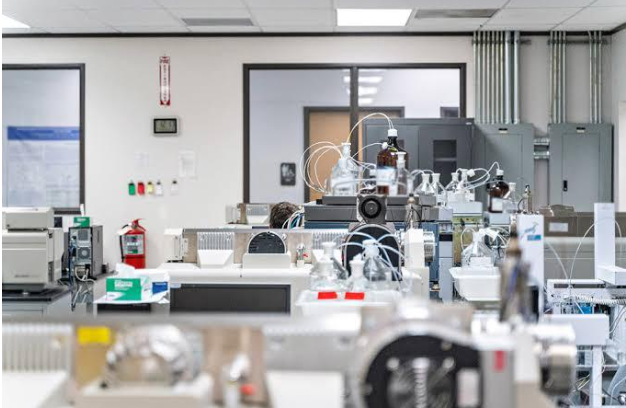
Drug development depends on accurate analytical technologies to evaluate the safety, metabolism, and performance of therapeutic compounds throughout preclinical and clinical studies. Conventional testing methods may struggle to distinguish complex drug molecules from biological components. LC-MS laboratories overcome these challenges by providing high sensitivity, precise molecular identification, and reliable data, enabling faster decision-making while supporting regulatory compliance and efficient drug development.
The Strategic Role of a Modern LC-MS Lab
Modern drug development relies on LC-MS laboratories to detect and analyze trace compounds in complex biological samples. By combining liquid chromatography with tandem mass spectrometry, these labs separate, identify, and quantify therapeutic compounds with exceptional sensitivity and accuracy.
Key capabilities include:
- Separating target compounds from complex biological matrices.
- Providing precise molecular identification through mass-to-charge analysis.
- Detecting analytes at very low concentrations.
- Delivering reliable data that supports drug discovery, pharmacokinetic studies, and regulatory submissions.
Overcoming Early Discovery Bottlenecks
Early pipeline discovery requires rapid filtering of extensive compound libraries to identify viable chemical iterations. Automated analytical systems allow laboratories to process hundreds of molecular variants within shortened operational schedules.
The primary discovery workflows utilize systematic testing sequences to monitor initial candidate drug behavior:
- Running high-throughput metabolic stability screens to identify rapidly degrading chemical structures.
- Profiling early plasma protein binding rates to estimate free drug concentrations in circulation.
- Documenting cross-species microsomal clearance differences to select appropriate animal models.
- Assessing initial solubility parameters across multiple physiological pH buffer variations. These analytical checkpoints eliminate unstable or poorly absorbed molecules before expensive animal testing begins.
To ensure biological activity aligns with structural safety, teams perform parallel microplate screenings. A specialized cell-based assay provides immediate data regarding therapeutic performance within living tissue samples. Furthermore, cell-based functional assays measure direct cellular responses to confirm proper receptor binding. For broad screening campaigns, cell-based screening assays evaluate entire structural libraries against specific disease models concurrently.
Executing Specialized Small Molecule Bioanalysis
Characterizing low-molecular-weight therapeutics requires robust analytical frameworks that can track complex in vivo biotransformations. Performing precise Small-molecule Bioanalysis allows researchers to map out complete pharmacokinetic profiles across progressive test doses. This data establishes fundamental parameter values including maximum concentration, half-life, and systemic clearance rates.
Accurate quantification depends on preventing matrix-induced ionization suppression during the mass spectrometry interface phase. Technicians utilize stable isotope-labeled internal standards to correct for minor processing variations across batches. This technical precaution guarantees that recorded peak ratios translate directly into authentic biological concentration values.
Method Creation and Validation Protocols
Developing an LC-MS method involves optimizing analytical conditions to achieve accurate, sensitive, and reproducible results. Once developed, the method undergoes validation to ensure it meets regulatory quality standards before routine sample analysis.
Key validation parameters include:
- Calibration curve linearity across the required concentration range.
- Intra-day and inter-day precision.
- Analyte stability under different storage conditions.
- Extraction recovery to ensure consistent sample preparation.
Thorough method development and validation help generate reliable data and reduce the risk of analytical issues during drug development.
Operational Efficiencies in an LC-MS Laboratory
Operating a modern LC-MS laboratory requires sophisticated hardware investments and continuous quality assurance monitoring. Automated liquid handling systems prepare samples with high precision to reduce manual pipetting errors. This automation preserves sample integrity while speeding up the transition from extraction to instrument injection.
The resulting high-throughput capacity allows developers to manage large sample volumes from multi-site clinical trials. Sophisticated data-processing software automates peak integration to accelerate the generation of the final study report. This digital pipeline ensures that biopharmaceutical companies receive verified results within compressed development timelines.
Must Read: LC-MS Testing Importance in Food Safety and Environmental Analysis
Using Specialized Bioanalytical Services
Building an internal mass spectrometry infrastructure demands substantial capital expenditure and dedicated maintenance teams. Many biotechnology organizations utilize external LC-MS services to optimize their operational budgets and timelines. Outsourcing sample analysis provides immediate access to validated instrumentation without the associated overhead costs.
Partnering with an external provider for routine LC-MS testing ensures compliance with evolving regulatory guidance documents. Dedicated contract facilities maintain redundant systems to prevent project delays caused by unexpected instrument downtime. This strategic collaboration allows internal pharmaceutical teams to focus their resources on core discovery activities.
Furthermore, specialized contract laboratories provide deep expertise in handling complex biological matrices and challenging extractions. These scientists identify potential analytical liabilities early to protect project momentum during regulatory reviews. This collaborative approach ensures high-quality data delivery while streamlining the overall drug application process.
Conclusion
Tandem mass spectrometry systems are indispensable assets for accelerating modern biopharmaceutical development programs. Using an optimized LC-MS assay provides the sensitivity and specificity needed to characterize novel drug candidates accurately. The technology delivers reliable data across all stages of development, from early library screening to formal regulatory validation. By implementing automated workflows and validated methods, these platforms eliminate analytical bottlenecks and reduce project timelines. These advanced laboratories provide the verifiable evidence needed to efficiently bring safe therapeutics to global clinical markets.